Performance
Diagnostics
£40–50

Performance
AdBlue system repair fixes the fault behind the warning instead of switching the warning off, and on a car you drive on the road it is the only option we will recommend. Most faults are a sensor, an injector or the pump.
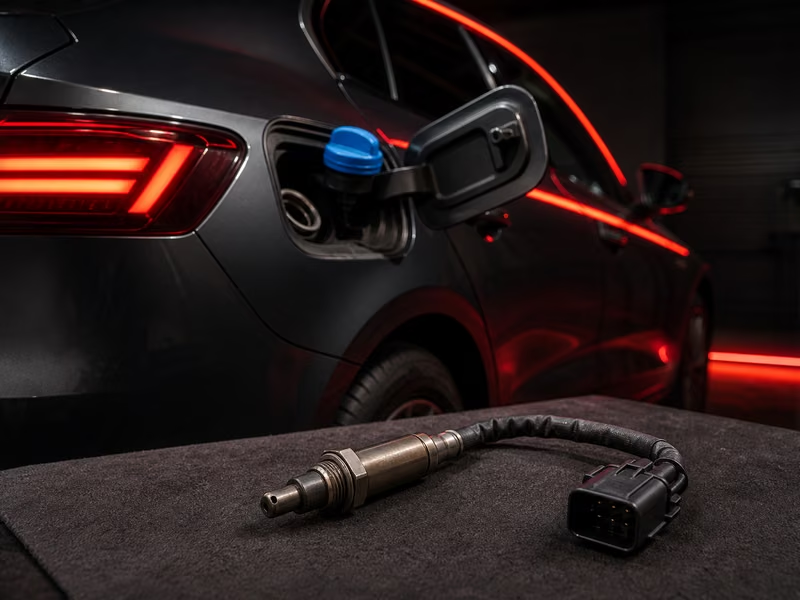
AdBlue is the fluid a modern diesel injects into its exhaust to cut nitrogen oxides. Around it sits a tank, a pump, an injector, a heater and a set of NOx sensors, and the ECU watches all of them.
When it decides something is wrong it warns you, then starts counting down the miles until the engine will not restart. That countdown is what brings most people here, usually with a dealer quote they were not expecting.
The faults themselves are ordinary. NOx sensors fail and are the most common single cause. Injectors crystallise and block, because AdBlue solidifies when it dries. Pumps fail, heaters fail, and tank level sensors read wrong. Occasionally nothing has failed at all and the fluid is simply the wrong stuff or contaminated.
Any AdBlue warning on a car, van or truck you drive on the road. That is the whole answer, and it is worth being blunt about it: if the vehicle is road-registered and road-used, repair is the route and a delete is not.
It is also the answer if you have been quoted a large sum by a main dealer. Dealers frequently replace a whole assembly where the failed part inside it can be replaced on its own, and the difference is usually substantial.
The one case where this is not your answer is a genuine off-road, motorsport or export vehicle, which is a different conversation and a different page.
It starts with diagnosis rather than a parts order. The AdBlue system throws codes that point at an area rather than a component, and replacing the obvious candidate is how people end up paying twice.
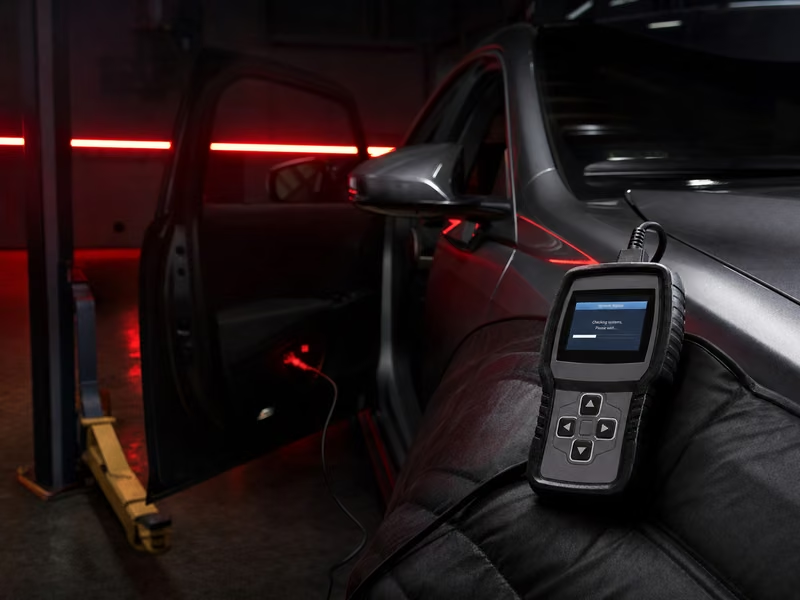
We run a diagnostics check before anything is written. If the car has a fault, tuning on top of it hides the fault rather than fixing it, so we deal with that first or we don't proceed.
We read live data from the NOx sensors and the dosing system, test the injector and pump rather than assuming, and check the fluid itself. Contaminated or wrong-specification AdBlue causes faults that look exactly like hardware failure and cost nothing to fix.
The work is done by an IMI-approved technician trained by The OBD Company, on dealer-level tools rather than a generic cable.
Once the repair is done, the system is reset and run so the countdown clears and the ECU is satisfied. A part fitted without the system relearning is a car that warns you again a fortnight later.
This is the service we point people at from our own AdBlue delete page, which should tell you where we stand. A delete is for off-road, motorsport and export vehicles. For a road car the repair keeps the vehicle legal, and we would rather do that job.
AdBlue faults are one of the things this workshop sees most, and the reviews that mention it are people who had already been somewhere else first.
The work is done at our unit at 85 Bogmoor Road in Glasgow, across from the Shieldhall test centre, on dealer-level tools rather than a generic cable — which matters here, because the AdBlue modules are exactly the ones a cheap reader cannot see.
The countdown is in miles and the ECU means it. Once it reaches zero the engine will not restart, and that turns a repair into a recovery. Get it looked at rather than running it down.
It is the wrong question for a road car. Removing or disabling emissions equipment is not road legal in the UK, and we offer deletes strictly for off-road, motorsport and export vehicles. For a car you drive on the road, repair is the option.
Dealers often replace a whole assembly where the failed part inside it can be replaced on its own. We diagnose to the component. Sometimes the answer is still the expensive one and we will say so, but it is worth finding out first.
If the warning is genuinely a low level, topping up clears it. If it is a fault, topping up changes nothing and the countdown carries on. The diagnostic check tells you which you have.
It has to meet the right specification, and it has a shelf life. Wrong or old fluid causes faults that look exactly like a failed part, so it is one of the first things we check.
Not if the right component was replaced and the system was reset properly. Repeat faults usually mean the original diagnosis was a guess, or the system was never relearned after the part went in.
Next step
Tell us what you drive and what you want done to it. We will come back with a price for your car, not a range off a chart.