Security

Cameras and sensors
Reverse cameras give you a clear view of what is behind you the moment you select reverse — wired into the factory display where your vehicle has one, or onto a screen we supply where it does not.
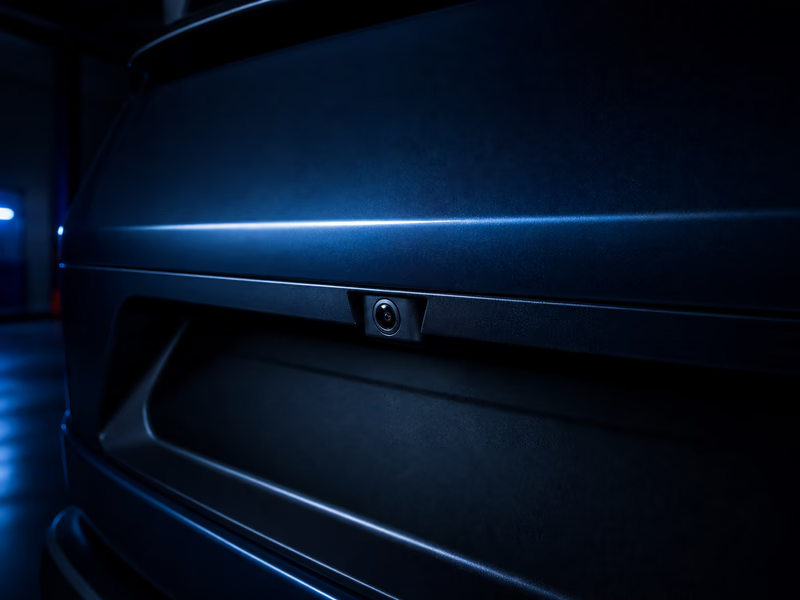
A camera at the back of the vehicle, wired so that selecting reverse switches the display to it automatically. You do not press anything; the picture is simply there when you need it, and gone when you do not.
Where the vehicle already has a screen, the camera goes into that. This is the version most people want, because there is nothing extra on the dashboard and the result looks like it came from the factory. Whether it is possible depends on the vehicle and on what its display will accept, and that is one of the first things we check.
Where there is no usable screen, we supply one. That is common on vans, older vehicles and pickups — exactly the vehicles where the view behind is worst and a camera is worth the most.
Van drivers, first and foremost. A panel van has no rear window at all, so a mirror tells you nothing about what is directly behind the back doors — and that is where the bollard, the low wall and the other vehicle's tow bar live.
Anyone towing, or driving something long. Hitching a trailer alone is a job a reverse camera turns from a three-attempt exercise into one, and reversing a long wheelbase into a domestic driveway is the same problem.
Drivers of older cars that never came with one. If the vehicle is otherwise sound and you have no intention of changing it, a camera is a small change that removes the one thing about it you dislike daily.
We start with the vehicle, because it decides the whole job. Whether the factory display can take a camera feed, where the camera can physically go, and how the cable gets from the back of the vehicle to the front are three questions with different answers on every model. Tell us what you drive and whether it already has a screen and we can answer most of it before the car arrives.
The camera is fitted into the rear of the vehicle rather than hung off it, and aimed so that what you see on the screen is what is actually about to be in your way. Aim matters more than people expect: a camera pointed slightly too high shows you the horizon and hides the kerb.
The work is done by an IMI-approved technician trained by The OBD Company, on dealer-level tools rather than a generic cable.
The cable runs inside the vehicle, behind trim, and the switching is wired to the reverse feed so it happens on its own. Before you leave, we reverse the vehicle with you in it and check the picture is right.
The hard part of this job is not the camera, it is the wiring and knowing what a given vehicle's display will accept. That is the same skill set the security side of this workshop uses on every tracker and immobiliser install, and it is why the cable ends up inside the trim rather than cable-tied along a sill.
It is done at our own unit at 85 Bogmoor Road in Glasgow, across from the Shieldhall test centre. Running a cable the length of a van properly means getting into it, which is workshop work.
We will tell you before you commit whether your vehicle can take a factory-display fit or whether it needs its own screen. That answer changes the job and the price, so it is not something to discover on the day.
Often, but it depends on the vehicle and on what its display will accept. It is the first thing we check. Send us the registration and whether the car already has a screen, and we will tell you which version of this job yours is.
No. It is wired to the reverse feed, so selecting reverse brings the picture up and coming out of reverse takes it away.
Yes, and that is the vehicle it helps most. There is no rear view to lose, so the camera is not improving the picture — it is the only picture there is.
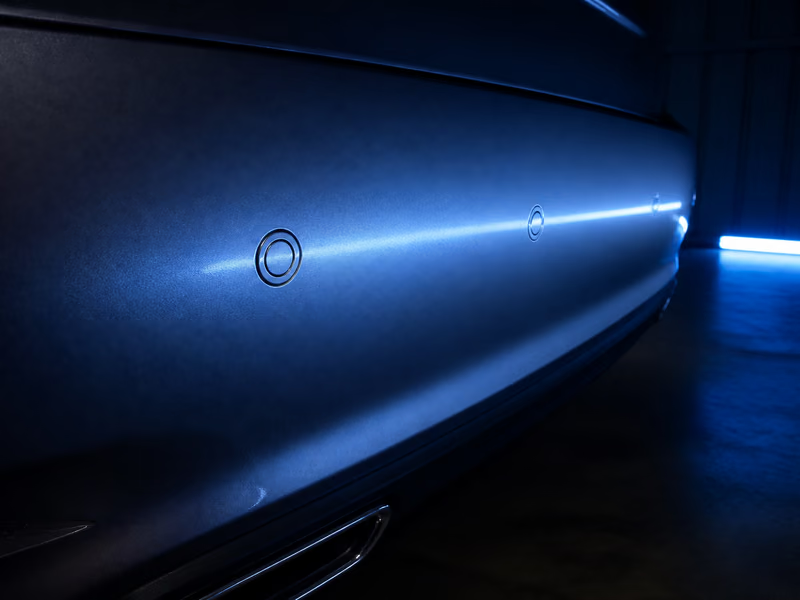
Yes, and a lot of people do. The camera shows you what is behind; the sensors tell you how close it is, including things below the camera's view. They are wired on the same visit rather than as two jobs.
It depends on the vehicle and on whether it needs its own screen, so we will not put a figure on this page. Tell us what you drive and whether it already has a display, and we will price it properly.
Next step
Tell us what you drive and what you want done to it. We will come back with a price for your car, not a range off a chart.