Performance
Stage 1 Remapping
From £300

Performance
Car diagnostics is the step that tells you what has actually failed before you spend anything on parts. A fault code names a circuit or a symptom, not a broken component, and the gap between those two is where most wasted money goes.
Price £40–50
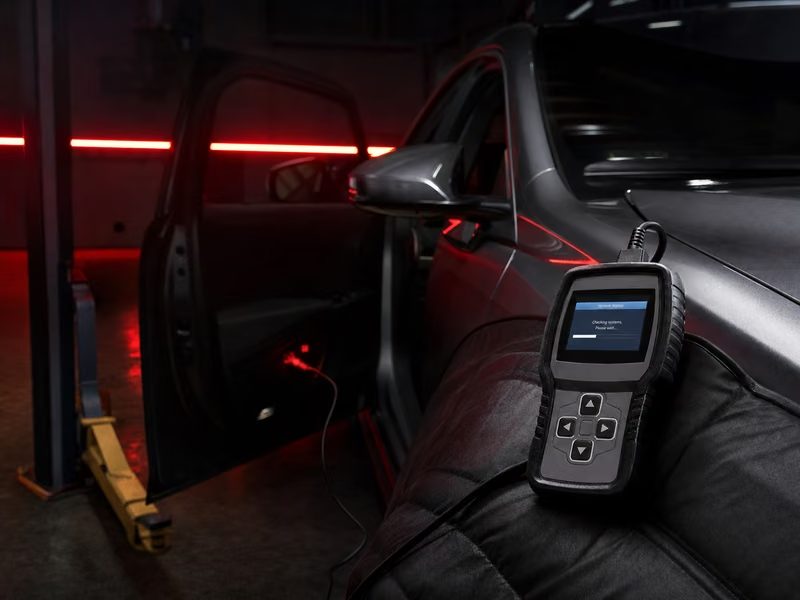
When a warning light comes on, the ECU stores a code. Reading that code takes about a minute and any parts shop will do it free, which is why plenty of people arrive already holding a printout and a part number.
The trouble is what the code actually says. A code like "EGR flow insufficient" does not mean the EGR valve has failed. It means the ECU asked for a flow it did not measure. That can be a clogged passage, a split vacuum pipe, a lazy sensor, corroded wiring, or the valve itself. Five possible causes, one code, and only one of them is the part named on the printout.
So the reading is where diagnosis starts, not where it ends. What you are paying for here is the testing after the reading: live data, actuating the component to see whether it responds, checking the circuit rather than assuming the part.
Any warning light you do not already understand. Engine management, DPF, AdBlue, ABS, airbag. Also limp mode, which is the ECU protecting the engine from something it has logged and is not a fault in itself.
Rough running, poor starting, a misfire, unexplained fuel consumption, or a car that feels different without an obvious reason. Intermittent faults especially, because those are the ones guesswork never solves.
It is also worth doing before you buy a used car, and before you pay someone else for a repair you are not sure about. A second opinion costs less than the wrong part.
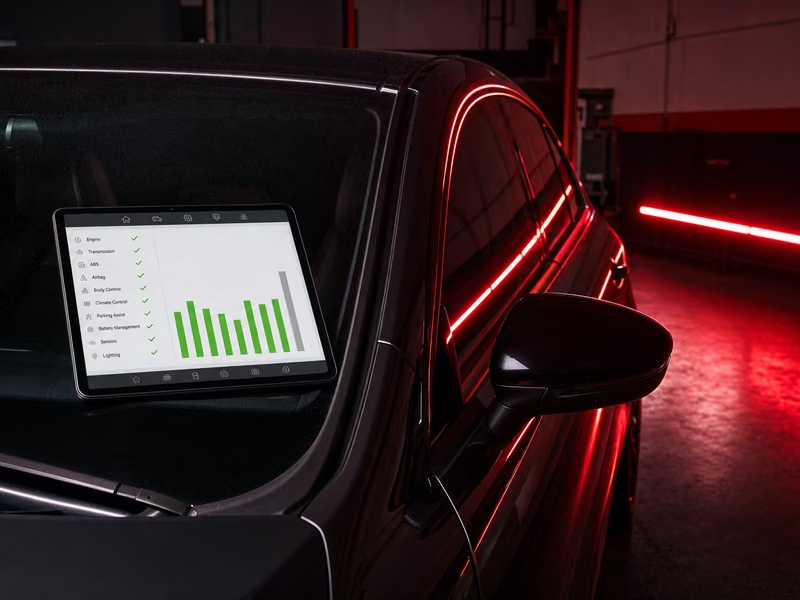
We read every module rather than just the engine, because a fault in one system frequently shows up as a symptom in another and the first code is not always the useful one.
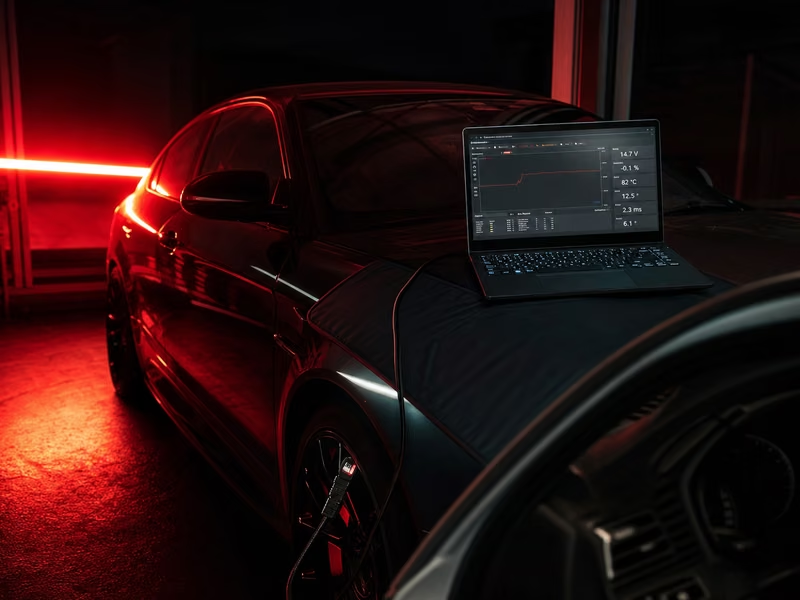
Then the actual work: live data while the engine runs, actuating components to see whether they respond, and testing the circuit around a part before condemning the part. A sensor reading out of range and a sensor with a broken wire look identical on a code reader and need completely different fixes.
The work is done by an IMI-approved technician trained by The OBD Company, on dealer-level tools rather than a generic cable.
You get the findings in plain English, and a written report by email if you want one to take elsewhere. Plenty of people do exactly that, and we would rather you had the information than felt committed to us for the repair.
We use dealer-level tools rather than a generic cable, which matters because a generic reader gets the standard emissions codes and stops there. Manufacturer-specific codes and live data from the modules a cheap reader cannot even see are usually where the answer is.
We run a diagnostics check before anything is written. If the car has a fault, tuning on top of it hides the fault rather than fixing it, so we deal with that first or we don't proceed.
The work is done at our unit at 85 Bogmoor Road in Glasgow, across from the Shieldhall test centre.
We will tell you when the answer is cheap or when it is nothing. A diagnostic check that ends with "this does not need fixing yet" is a good outcome, and we would rather say that than find you something to spend money on.
£40–50, which is the cheapest thing on this site and deliberately so.
It buys the diagnosis, not the repair. If we go on to do the work, tell us and we will talk about the whole job rather than treating them as two unconnected bills.
Because reading a code and diagnosing a fault are different jobs. The free read tells you which circuit the ECU is unhappy about. It does not tell you whether the sensor failed, the wiring corroded, or the passage blocked, and those have very different prices.
We can tell you what a code generally means and whether it sounds serious. We will not tell you what has failed on your car without testing it, because that is guessing with your money.
Limp mode exists to protect the engine, so the car is usually drivable but slow. If it is overheating, losing oil pressure, or making a noise it was not making before, do not drive it. Ring us and we will talk it through.
No. Take the report and go wherever you like. Some people want a second opinion before committing and that is a completely reasonable thing to want.
Yes, and we will not skip it. Tuning on top of an existing fault hides the fault rather than fixing it, and it puts a stronger map on an engine that already has something wrong with it. Every remap here runs a diagnostics check first.
Intermittent faults sometimes will not show themselves on the day. We will tell you that plainly rather than inventing something, and we will tell you what to watch for so the next visit has more to go on.
Next step
Tell us what you drive and what you want done to it. We will come back with a price for your car, not a range off a chart.