Security

Cameras and sensors
Dash cameras supplied and fitted properly: hard-wired into the vehicle rather than run off the cigarette lighter, so there is no cable trailing across your dashboard and the camera can still record while the car is parked.
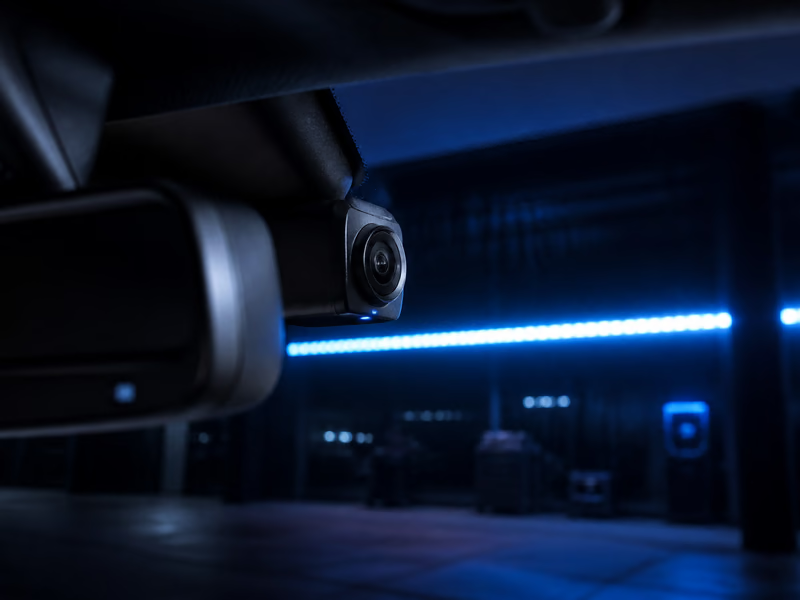
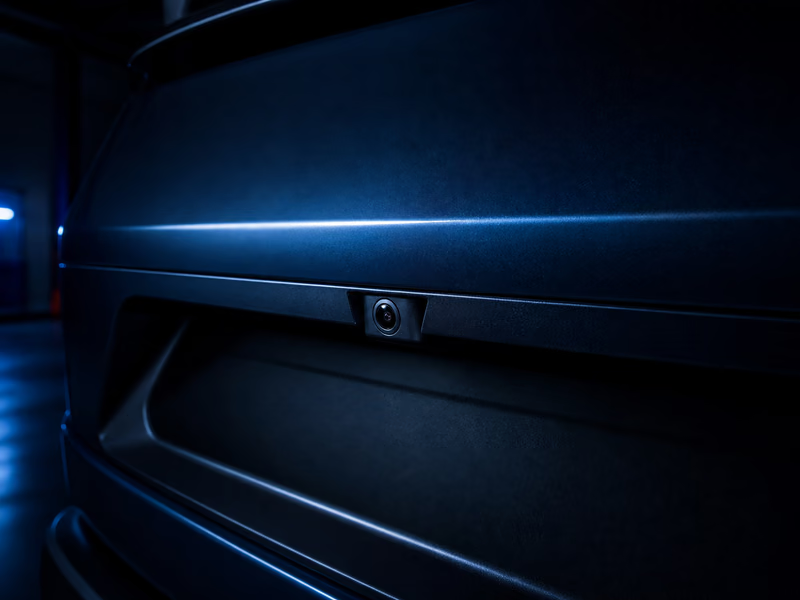
Front, rear and cabin-facing cameras, on their own or in combination. A front camera covers what is ahead of you. A rear camera covers what happens behind, which is where a large share of everyday incidents actually occur. A cabin-facing camera looks inward, which is what fleet operators, taxi and private hire drivers usually want.
The part that matters is the wiring. A camera plugged into a 12V socket is a cable across your dashboard, a socket you cannot use for anything else, and a camera that stops the moment you turn the engine off. We hard-wire instead: the feed is taken from the vehicle's own supply, the cable is tucked behind the trim and the headlining, and nothing is visible except the camera itself.
Hard-wiring is also what makes parking protection possible at all. A camera with a permanent supply can keep watching while the car is left, which a cigarette-lighter feed cannot do — the socket is usually dead once the ignition is off.
Private drivers, usually after something has already happened — a knock in a car park with nobody around, or a disputed account of a junction. The camera is bought so that the next time there is a version of events that is not an argument.
Vans and commercial vehicles, where the driver is not always the owner and the vehicle is the business. A front-and-cabin pair answers most of what a fleet operator actually needs to know.
Taxi and private hire drivers, where a cabin-facing camera is often expected rather than optional. Tell us what your operator or licensing conditions require and we will fit to that.
We start with what the camera is for. Evidence after a collision, protection while the car is parked, and keeping an eye on a van and its driver are three different jobs, and they point at different cameras and different wiring. Getting that wrong is how people end up with a camera that does not do the thing they bought it for.
The camera is positioned so it sees what it needs to see without sitting in your eyeline, then the cable is routed out of sight — behind the headlining, down the pillar trim and into the vehicle's own supply. Trim comes off and goes back on; nothing is cut that cannot be put back.
The work is done by an IMI-approved technician trained by The OBD Company, on dealer-level tools rather than a generic cable.
Before you leave, the camera is powered up, the recording is checked on the screen, and we show you how to get footage off it. A camera nobody knows how to download from is a camera that was not much use on the day it mattered.
This is wiring work, and wiring is what the security side of this workshop does all day. The same technician who conceals a tracker into a vehicle's loom is the one routing your camera cable, which is why it ends up behind the trim instead of taped along the windscreen.
It is done at our own unit at 85 Bogmoor Road in Glasgow, across from the Shieldhall test centre. Taking pillar trim off properly is workshop work.
We will tell you what a camera will and will not do for you. What we do not do is promise you what a recording will be worth to an insurer or an employer afterwards — that is their decision to make, and nobody fitting the camera can make it for them.
It can, if the camera supports parking mode and it is hard-wired for it. That is one of the main reasons to hard-wire rather than use the cigarette lighter, which is usually dead once the ignition is off. Tell us if parking protection is what you want and we will wire for it.
A parking-mode install is wired through a cut-off that stops drawing once the battery falls to a set level, so the car still starts. We set that up as part of the fit rather than leaving a camera drawing on the battery indefinitely.
Usually yes. Tell us what it is and we will tell you whether it can be hard-wired and whether it supports parking mode. If it cannot do what you are hoping for, you will hear that before we start.
The camera is, because it has to see out. The wiring is not — it runs behind the headlining and the pillar trim, so there is no cable across the dashboard and no loose loom in the footwell.
It depends on the camera and the vehicle, so we will not quote a figure at you here. Tell us what you drive and what you want the camera for, and we will price it properly.
Next step
Tell us what you drive and what you want done to it. We will come back with a price for your car, not a range off a chart.